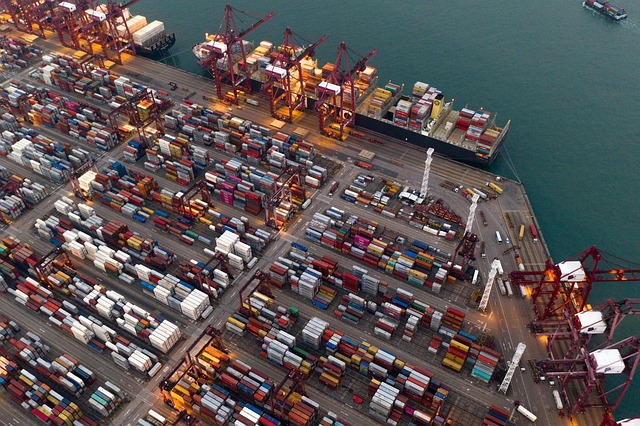
A plant manager in southern Ontario watches a production line slow down because a container of components is still sitting at a rail yard two hours away. The part was never lost, it was simply caught in a handoff that nobody planned for. That handoff, moving a container from ship to rail to truck, is the entire idea behind intermodal freight, and it is a part of the supply chain that engineering and procurement teams rarely study until something goes wrong.
For manufacturers, distributors, and industrial buyers across Canada, understanding intermodal transportation is no longer a nice-to-have. Rising fuel costs, driver shortages, and congestion at major ports have pushed more freight onto rail for the long haul, with trucks handling only the first and last legs. That shift changes how a buyer should plan lead times, select carriers, and budget for freight. This article walks through what intermodal container transport actually involves, why it matters for industrial supply chains, and what to look for when choosing a partner to manage the moves.
What Intermodal Transportation Actually Involves
Intermodal transportation refers to moving the same sealed container across two or more modes, typically ship, rail, and truck, without unloading and repacking the freight at each transfer point. A container might arrive at the Port of Montreal by sea, move by rail to an inland terminal near Toronto, then finish its journey by truck to a warehouse or production facility. Because the goods stay inside one container for the entire trip, there is less handling, less risk of damage, and fewer opportunities for paperwork errors.
For engineering teams sourcing raw materials or components internationally, this matters because the rail leg is usually the most cost-efficient part of the journey over long distances, while the trucking legs provide the flexibility to reach facilities that are nowhere near a rail terminal. The trade-off is coordination. Each handoff needs a carrier who understands container chassis availability, terminal appointment windows, and the documentation that keeps a box moving instead of sitting in storage.
Why Rail-to-Road Container Moves Matter for Industrial Supply Chains
A single rail car can carry the equivalent of several truckloads, which brings down the per-unit cost of moving heavy or bulky components over distances of 500 kilometres or more. For a manufacturer importing steel stock, machine parts, or packaging materials from overseas, that cost difference adds up quickly across a year of shipments.
There is also a reliability angle. Rail networks are less exposed to highway congestion and weather delays than a single long-haul truck route, which can make transit times more predictable once a shipment is on the rail leg. The catch is that predictability only holds if the trucking company handling drayage, the short move between the port or rail yard and the final destination, is reliable and has enough equipment to avoid bottlenecks during peak season.
How to Evaluate Intermodal Trucking Companies Before You Commit
Not every carrier that advertises intermodal service actually runs a dedicated chassis fleet or holds the terminal credentials needed to pick up containers without delay. When comparing intermodal trucking companies, procurement and logistics managers should ask a few direct questions: does the carrier have appointment access at the terminals you actually use, how many chassis does it control versus lease on demand, and what happens if a container misses its free time window and starts accruing demurrage charges.
It is also worth confirming whether the carrier tracks containers in real time or relies on manual check-ins. For a production schedule built around just-in-time deliveries, a two-hour gap in visibility can be the difference between a line running on schedule and a costly stoppage.
Choosing a Trucking Company in Toronto for the Final Leg
The Greater Toronto Area sits at the centre of Ontario's intermodal network, with rail terminals feeding thousands of containers into the region every week. Because of that density, the final truck leg into a plant or distribution centre is often the most time-sensitive part of the move. A delay of even a few hours at this stage can cascade into missed production windows or late outbound shipments to customers.
When sourcing a trucking company Toronto manufacturers can rely on for drayage and last-mile container delivery, look for a carrier with local terminal relationships, enough equipment to cover same-day and next-day pickups, and experience coordinating with both the rail side and the receiving dock. A carrier that only operates long-haul lanes will not necessarily have the local knowledge needed to navigate GTA terminal congestion efficiently.
Cost and Transit-Time Factors Worth Planning Around
Intermodal freight generally costs less per kilometre than straight truckload service, but the savings depend on volume, distance, and how tightly the schedule needs to be managed. Shipments under roughly 500 kilometres often do not see enough rail savings to offset the extra handling, so a straight truck move may still make more sense for shorter regional lanes. Longer cross-country moves are where intermodal typically pays off, provided the buyer builds in a bit of schedule buffer for the rail portion, since rail transit times are efficient but less flexible than a dedicated truck once the container is loaded.
Bringing It Together
Intermodal transportation is not simply a cheaper way to move freight, it is a coordination problem that rewards planning. Engineering and procurement teams that understand how the rail and truck legs fit together, and that vet their carriers on terminal access, equipment availability, and tracking visibility, tend to avoid the costly surprises that come from treating intermodal like a single point-to-point shipment. Working with a carrier experienced in both the rail handoff and the final-mile delivery reduces the number of places where a shipment can stall.
Companies evaluating a logistics partner for container moves across Ontario and beyond should request a direct conversation about terminal coverage and equipment before signing a contract, rather than relying on a general sales pitch.
Frequently Asked Questions
What is the difference between intermodal and regular trucking?
Regular trucking moves freight door to door using only trucks. Intermodal transportation moves the same sealed container across rail and truck, usually to cut cost on long distances while trucks handle the shorter first and last legs.
How long does an intermodal container shipment typically take?
Transit time depends on distance and rail scheduling, but cross-country moves within Canada often take several days longer than an equivalent straight truckload due to the rail leg and terminal handling. Shorter regional moves see less difference.
Why do some shipments avoid intermodal and use straight trucking instead?
Shipments under about 500 kilometres, or freight with tight delivery windows, often move faster and more predictably by truck alone, since there is no rail handoff or terminal dwell time to account for.
What should a buyer ask a carrier before booking intermodal service?
Ask about terminal appointment access, chassis availability, how demurrage and detention charges are handled, and whether container tracking is available in real time rather than through manual updates.
Does intermodal shipping cost less than full truckload?
Usually yes for longer distances and larger volumes, since rail is more fuel-efficient per tonne over long hauls. For shorter lanes or smaller shipments, the added handling can offset the savings.